Furniture Care Specialists
Sofas, sectionals, and chairs each carry a fabric code that tells us exactly how they can be safely cleaned. We match the method to the fabric — water-based, solvent-based, or dry-vacuum only — instead of running every piece through the same process — trusted sofa and couch cleaning for Port Washington and Long Island, NY homes.
Not All Fabric Cleans the Same
Most furniture has a small tag under a cushion or on the frame with a letter code: W, S, WS, or X. That code isn't decoration — it's the manufacturer telling anyone who cleans it what the fabric can safely handle. Using a water-based method on an S-coded fabric can cause shrinking, watermarking, or permanent discoloration. We check the code and identify the fiber before choosing a cleaning method, rather than treating every sofa the same way.
Local Know-How
W means water-based cleaning is safe. S means solvent-based, dry-clean-only methods are required, since water can cause shrinking or rings. WS means either method works. X means vacuum only, with no liquid or solvent of any kind. Getting this wrong is the single most common cause of upholstery damage from cleaning.
Steam (hot water extraction) works well on durable, W-coded fabrics like many cottons and synthetic blends. Solvent-based dry cleaning is used on delicate fabrics, silks, and certain velvets that water would damage. We choose the method based on the tag, not habit.
Pet accidents on upholstery are harder to fully remove than on carpet, because fabric and foam cushions absorb odor-causing bacteria deeper into the material. Surface cleaning alone often leaves the smell to resurface on humid days, which is why pet-affected furniture gets treated at the source, not just the surface.
Homes near the Long Island Sound often have sunroom or porch furniture exposed to more humidity than indoor pieces. Moisture trapped in cushions and frames can lead to a musty smell or mildew that surface cleaning won't fix, especially in fabric that doesn't fully dry between uses.
Visible shine or darkening on arms and cushion edges, a musty smell, allergy symptoms that ease when you're not sitting on it, and stains that resist regular vacuuming are all signs it's due for a professional clean rather than another round of spot treatment.
Pricing depends on the piece (chair versus sectional), fabric type, number of cushions, and stain severity. We give you an upfront number after a quick walkthrough or phone description — never a surprise invoice, and $20 off is currently available for new and returning customers.
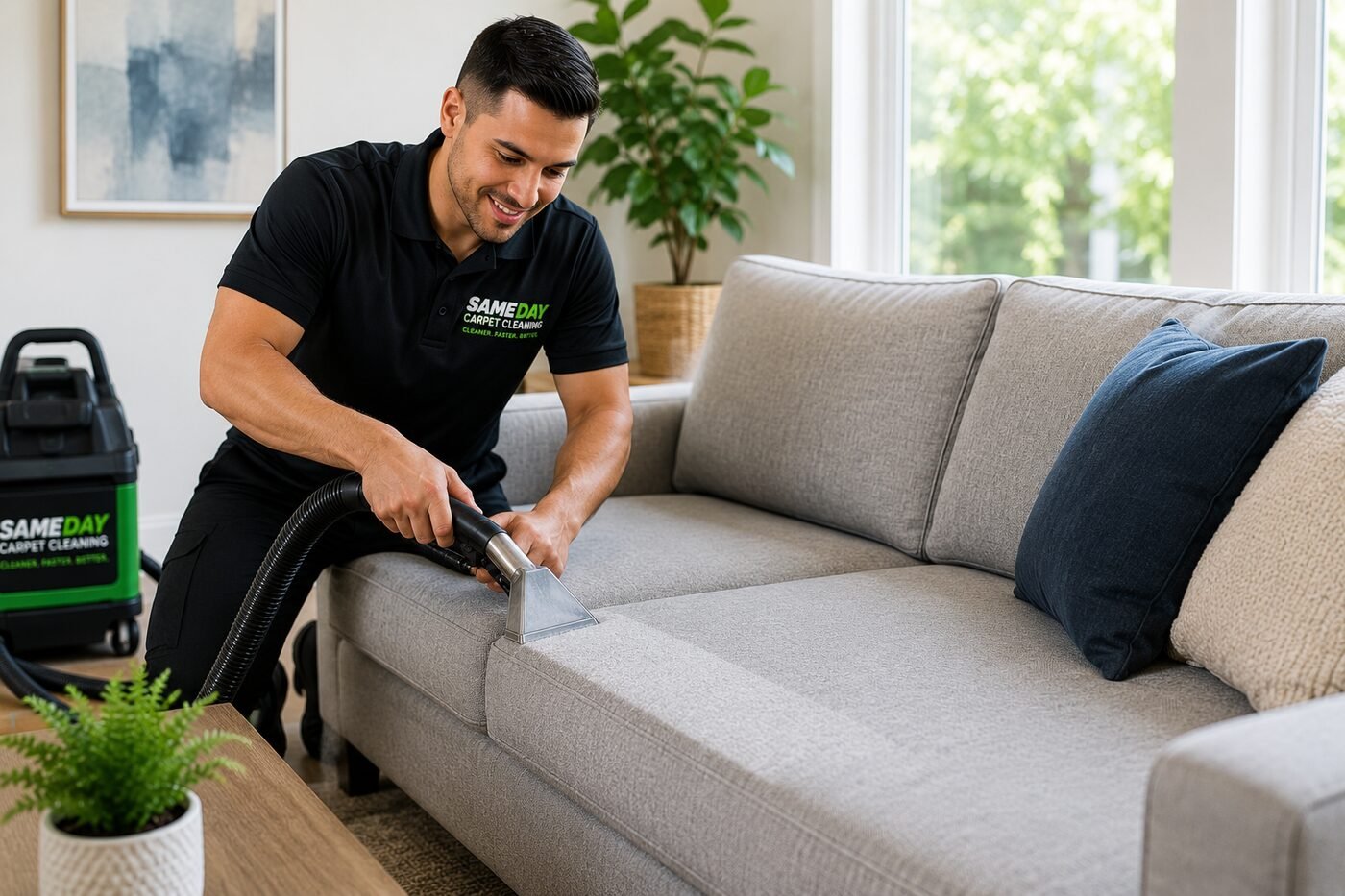
Our Process
Confirm W, S, WS, or X.
Loose soil & stains first.
Steam or dry, per fabric.
Targeted spot work.
Nap & pile restored.
Walkthrough before we leave.

Why Choose Us
We check the cleaning code before we touch your furniture, not after something goes wrong.
Questions?
Yes. We're a local, Port Washington-based team serving the surrounding Long Island North Shore, including Manhasset, Great Neck, Roslyn, Sands Point, and Plandome. If you searched for upholstery and sofa cleaning near me, you're in the right service area. See all our service areas →
Yes, couch cleaning and sofa cleaning are exactly what upholstery cleaning covers. We clean sofas, couches, sectionals, loveseats, and chairs throughout Port Washington and Long Island, all matched to the specific fabric's cleaning code.
These codes, usually on a tag under a cushion, tell a technician how to clean the fabric. W means water-based cleaning is safe. S means solvent-based, dry-clean-only methods are required. WS means either method can be used. X means vacuum only, no liquid or solvent.
Yes. Microfiber and velvet are cleaned with a method matched to their specific fabric code and pile direction, since the wrong approach can leave watermarks or flatten the nap permanently.
Yes. Eco-friendly, non-toxic solutions are used, and furniture is safe to use again once it's dry to the touch.
Most upholstery is dry within 2 to 5 hours, depending on fabric type and how much moisture the cleaning method uses.
Pricing depends on the piece, fabric type, number of cushions, and stain severity. We provide an upfront price after a quick walkthrough or a description over the phone.
Every 12 to 24 months for typical household use, and every 6 to 12 months for furniture used daily, exposed to pets, or in high-traffic living rooms.
Related Reading
Service Areas
Same-day appointments, upfront pricing, and $20 off your first service.