Tucked under a cushion or on the frame of most upholstered furniture is a small tag with a single letter or letter combination: W, S, WS, or X. Most homeowners never notice it, but it's one of the most useful pieces of information for keeping furniture looking good long-term.
W: Water-Based Cleaning Is Safe
A W code means the fabric can be cleaned with water-based solutions without significant risk of shrinking, watermarking, or discoloration. Most cottons and many synthetic blends fall into this category.
S: Solvent-Based, Dry Cleaning Only
An S code means water should be avoided entirely, and cleaning should use solvent-based products instead. Water on an S-coded fabric can cause shrinking, rings, or permanent watermarking, even from a small amount used to blot a spill.
WS: Either Method Works
A WS code means the fabric tolerates both water-based and solvent-based cleaning, giving more flexibility in how a stain or general cleaning is approached.
X: Vacuum Only
An X code is the most restrictive, meaning the fabric shouldn't be cleaned with any liquid or solvent at all, only vacuumed or brushed. This is common on delicate decorative fabrics not meant for heavy everyday use.
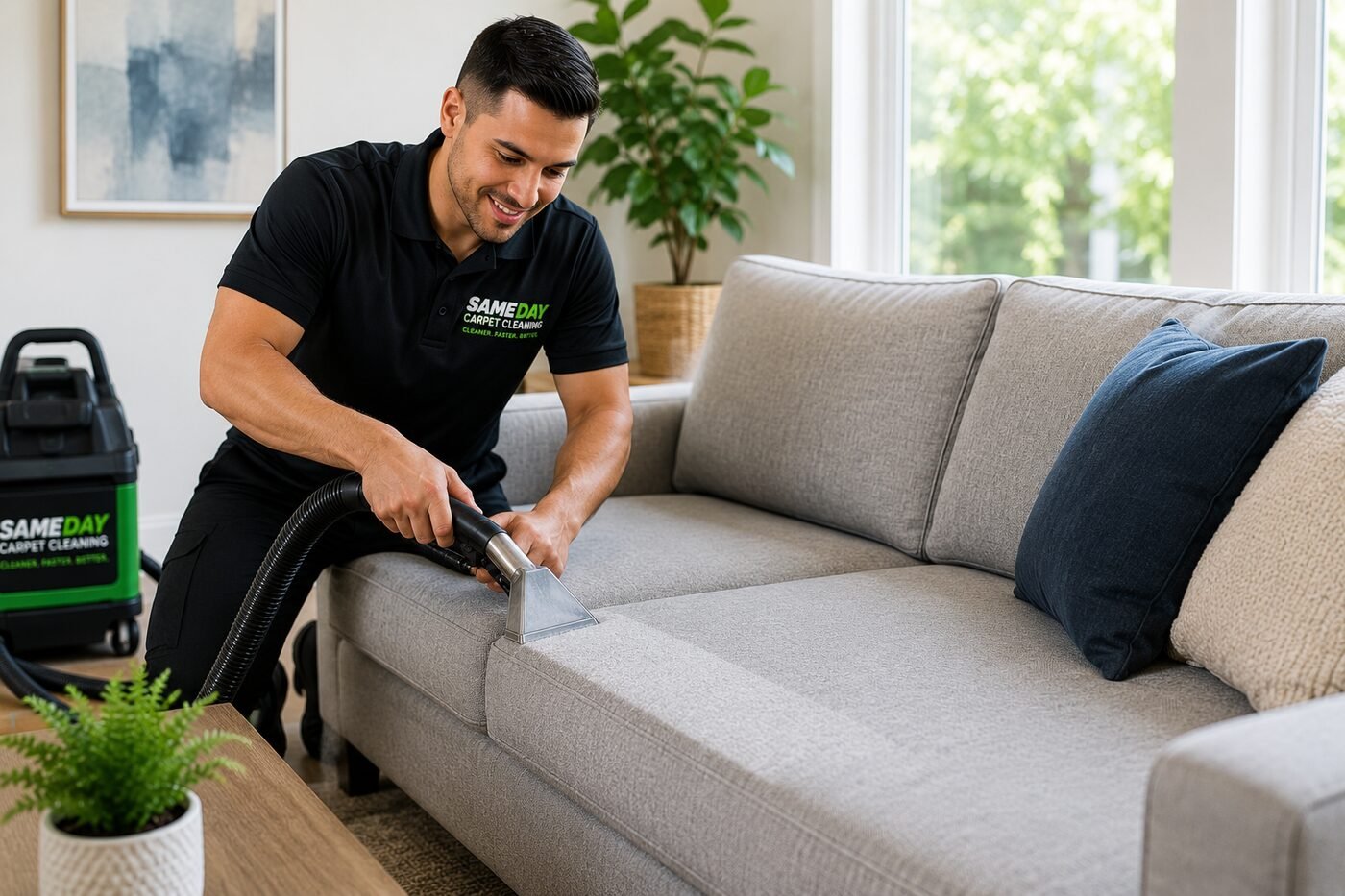
We check the code on every piece before cleaning, so the method always matches the fabric.
See Our Upholstery Cleaning Process →Why This Matters More Than People Realize
Using the wrong method on a fabric, water on an S-coded piece, for example, is one of the most common and most avoidable ways upholstery gets permanently damaged during cleaning. The tag exists specifically to prevent this, but only if someone actually checks it first.
What to Do If the Tag Is Missing or Worn Off
If the tag is missing, faded, or was never there to begin with, a professional can typically identify the fabric type through touch and a small spot test rather than guessing. This is a normal part of the process for any piece without a clear, legible code.