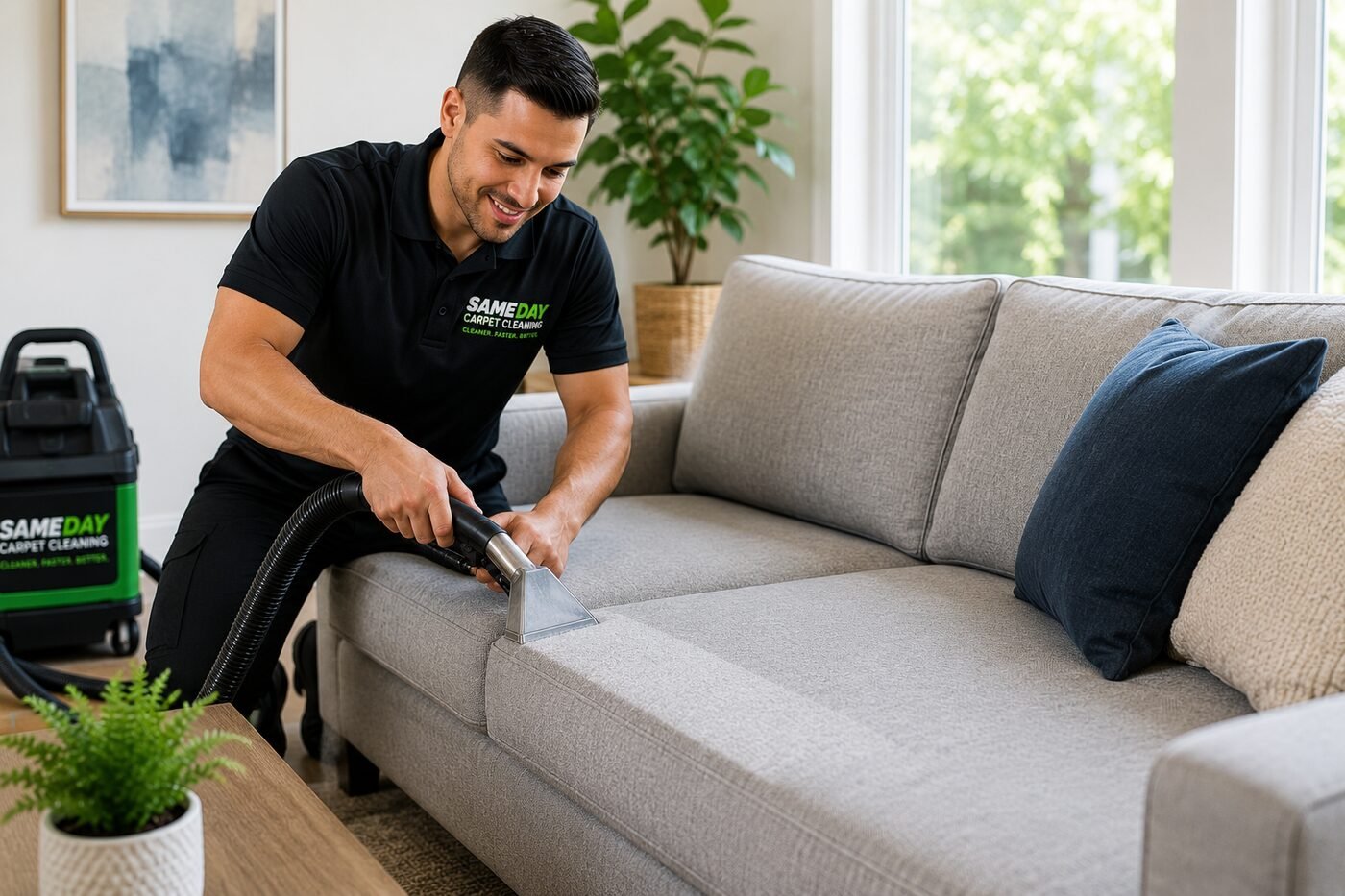
Microfiber and velvet both have a soft, plush feel that can make them easy to confuse at a glance, but they're fundamentally different materials that respond to cleaning very differently. Treating one like the other is a common way otherwise avoidable damage happens.
Microfiber: Durable, But Watermarks Easily
Microfiber is a synthetic fabric known for durability and resistance to staining, which makes it popular for everyday furniture. Its main vulnerability is watermarking: applying water directly, without the right technique, often leaves visible rings or streaks once it dries, even though the underlying stain may have lifted just fine.
Velvet: Delicate Pile That Shows Pressure
Velvet's pile direction affects how light reflects off it, which is why pressing on velvet, sitting, wiping, or cleaning, can leave visible marks where the pile has been flattened or brushed the wrong way. Velvet is also more sensitive to over-wetting than microfiber, since excess moisture can cause the pile to mat or lose its texture.
Fabric Codes Still Apply to Both
Despite feeling similar, microfiber and velvet can carry different fabric codes, W, S, WS, or X, depending on the specific product, and that code should always be checked rather than assumed based on how the fabric feels. A velvet sofa coded for solvent-based cleaning only will react poorly to a water-based approach that would be perfectly fine on a W-coded microfiber piece.
We identify the exact fabric and check the cleaning code before treating any upholstered piece.
See Our Upholstery Cleaning Process →Restoring Pile Direction After Cleaning
Velvet in particular needs to be brushed or groomed in a consistent direction after cleaning to restore its even appearance, since disrupted pile is one of the most visible signs of a rushed cleaning job. This step matters less for microfiber, which doesn't have the same directional pile structure.
The Bottom Line
Both fabrics can be cleaned safely and look great afterward, but only when the cleaning method accounts for how each one actually behaves rather than assuming they're interchangeable because they feel similar to the touch.