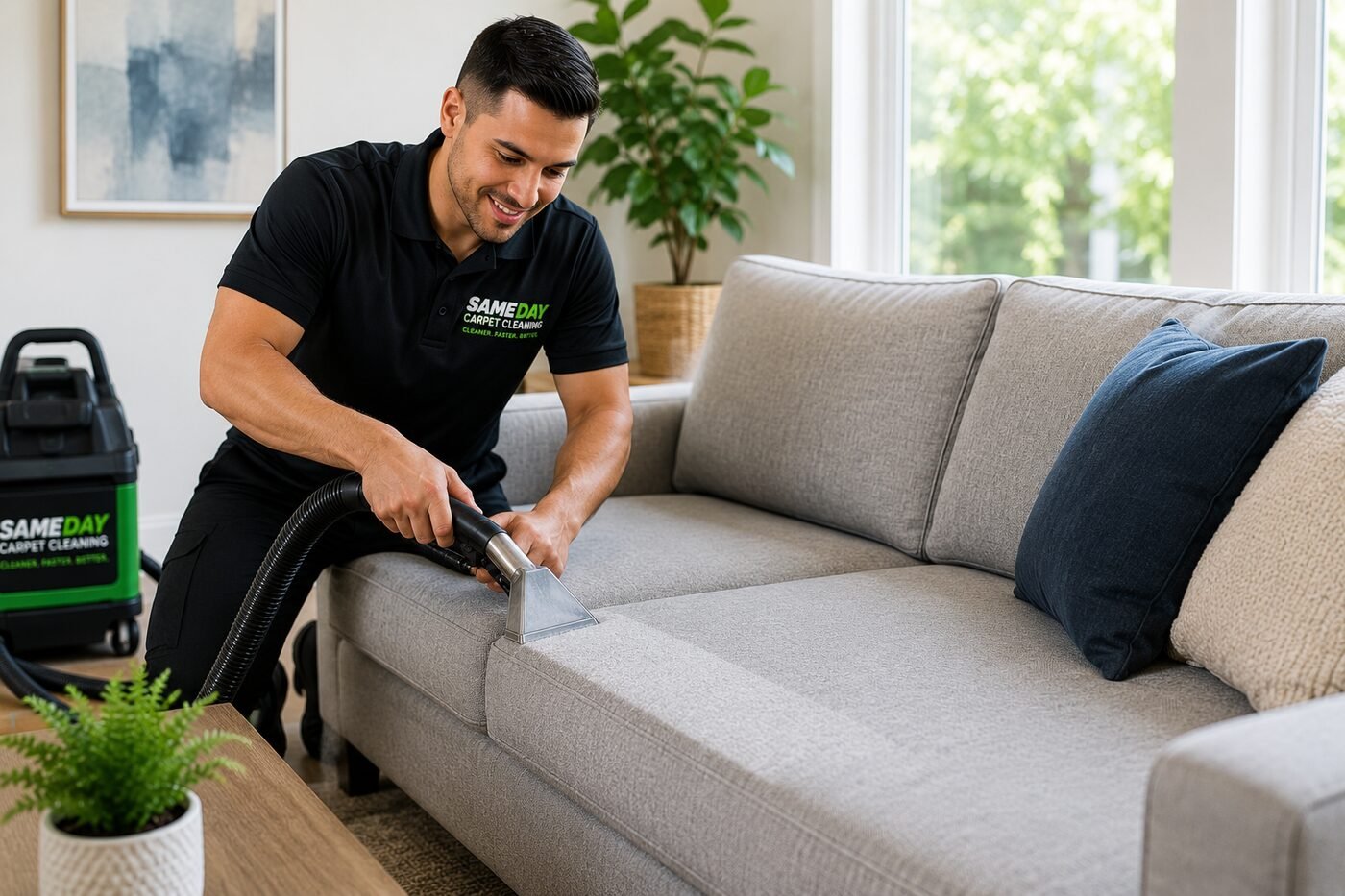
Leather furniture can genuinely last decades when it's cared for correctly, which is part of why it's often treated as a long-term investment rather than furniture that gets replaced every few years. Most of what determines whether it lasts happens between professional cleanings, in the everyday habits (or mistakes) that either protect the leather or slowly wear it down.
1. Keep It Out of Direct, Constant Sun
UV exposure dries leather out and fades color unevenly over time, and the effect is cumulative, meaning a few hours a day, every day, adds up to real damage over a year or two. If a piece of leather furniture sits directly in a sunbeam for a large part of the day, consider curtains, blinds, or simply rearranging the room so the leather isn't taking constant direct exposure.
2. Condition It, Don't Just Clean It
Cleaning removes surface dirt, but it can also strip some of the natural oils that keep leather flexible if it isn't followed by conditioning. Leather that's cleaned repeatedly without conditioning becomes progressively drier and more prone to cracking, which is the opposite of what you want. A basic leather conditioner applied every few months, in addition to professional cleaning, does a lot to keep leather supple.
3. Wipe Up Spills Immediately, But Skip the Water
Leather isn't like fabric upholstery, where a quick blot with water is usually safe. Excess moisture on leather can cause discoloration, watermarking, or stiffening as it dries. If something spills, blot it gently with a dry or barely damp cloth right away, and avoid rubbing, which can push the spill deeper into the material rather than lifting it out.
4. Know Your Leather Type
Full-grain leather is the most durable and least processed, top-grain is sanded and refinished for a more uniform surface, and bonded leather is made from scraps bonded to a backing material. Each tolerates products and handling differently, and using a cleaner or conditioner meant for one type on another can cause problems ranging from a dull finish to actual surface damage. If you're not sure which type you have, it's worth checking before applying any product at home.
We identify the leather type and condition before every cleaning, then finish with conditioning included.
See Our Leather Cleaning Process →5. Watch for Humidity, Not Just Sun
Homes near the Long Island Sound see more humidity swings than homes further inland, and that affects leather in a less obvious way than sun exposure does. Humidity can allow mold to develop in seams and folds if leather isn't conditioned regularly, particularly on pieces that sit in a room without much airflow. Keeping the room ventilated and conditioning on a regular schedule helps offset this risk.
What Professional Cleaning Adds That Home Care Can't
Between professional visits, these five habits go a long way toward keeping leather in good shape. But professional cleaning uses pH-balanced, leather-specific products and addresses buildup that's worked into the surface over months, which home care alone won't fully reach. Most leather furniture benefits from professional cleaning and conditioning every 6 to 12 months, with the exact interval depending on how much daily use the piece gets and how much direct sun or humidity it's exposed to.