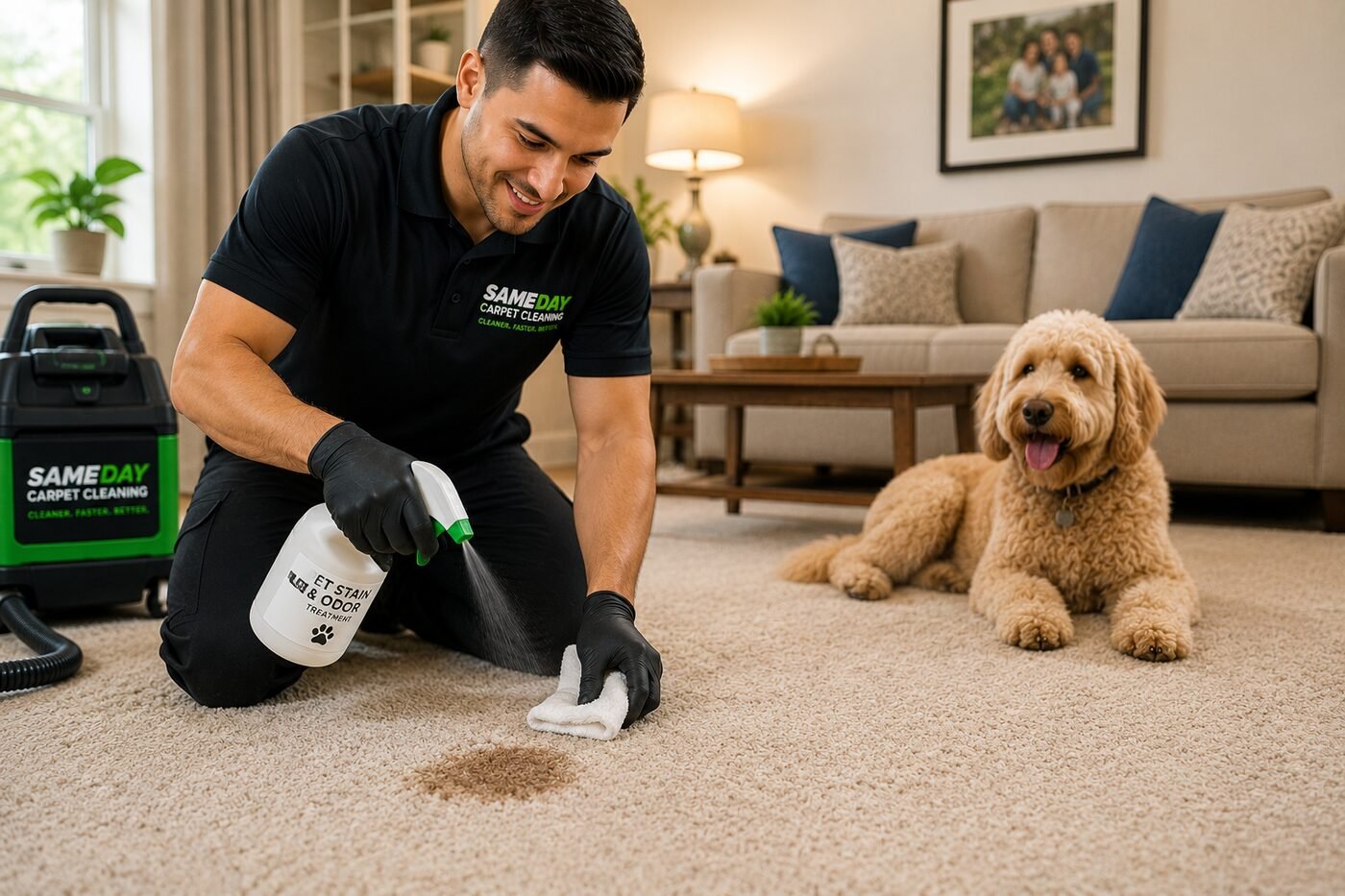
Once a spot has been thoroughly and correctly cleaned, odor-causing bacteria broken down rather than masked, pets sometimes still return to that exact area out of habit rather than because anything remains to detect. Understanding this distinction is key to actually breaking the cycle.
Habit Can Outlast the Odor
Animals build strong location-based habits, especially around bathroom behavior, and a spot that's been used multiple times can remain a habitual target even after it's been fully treated and no longer carries any detectable trace. This is a behavioral pattern, not a sign that the cleaning failed.
How to Tell If It's Habit or Residual Odor
If the treated area has been professionally cleaned with UV verification and enzyme treatment, and the pet still returns, it's worth ruling out residual odor before assuming it's pure habit. A quick black light check can confirm whether any contamination remains, which helps separate a genuine cleaning gap from a behavioral pattern.
Temporarily Blocking Access Helps Break the Pattern
Physically blocking access to the specific spot for a period of time, using furniture, a training mat, or a temporary barrier, interrupts the habitual return without requiring extensive retraining. Once the pattern is broken for a few weeks, most pets don't automatically return to the old habit once access is restored.
We verify treatment with UV detection, so you know whether a returning pet is a habit or a missed spot.
See Our Odor Removal Process →Positive Reinforcement Elsewhere
Reinforcing appropriate bathroom behavior in the correct location, rather than only reacting to the problem area, helps redirect the habit more effectively than blocking access alone. This applies most directly to dogs but can help with cats as well, particularly around litter box placement and cleanliness.
When to Consider a Vet Visit
If a pet's bathroom habits have changed suddenly, especially in an older animal, it's worth ruling out a medical cause with a veterinarian before assuming it's purely behavioral. Sudden changes in urination patterns can sometimes indicate a health issue that needs attention independent of any cleaning or training approach.