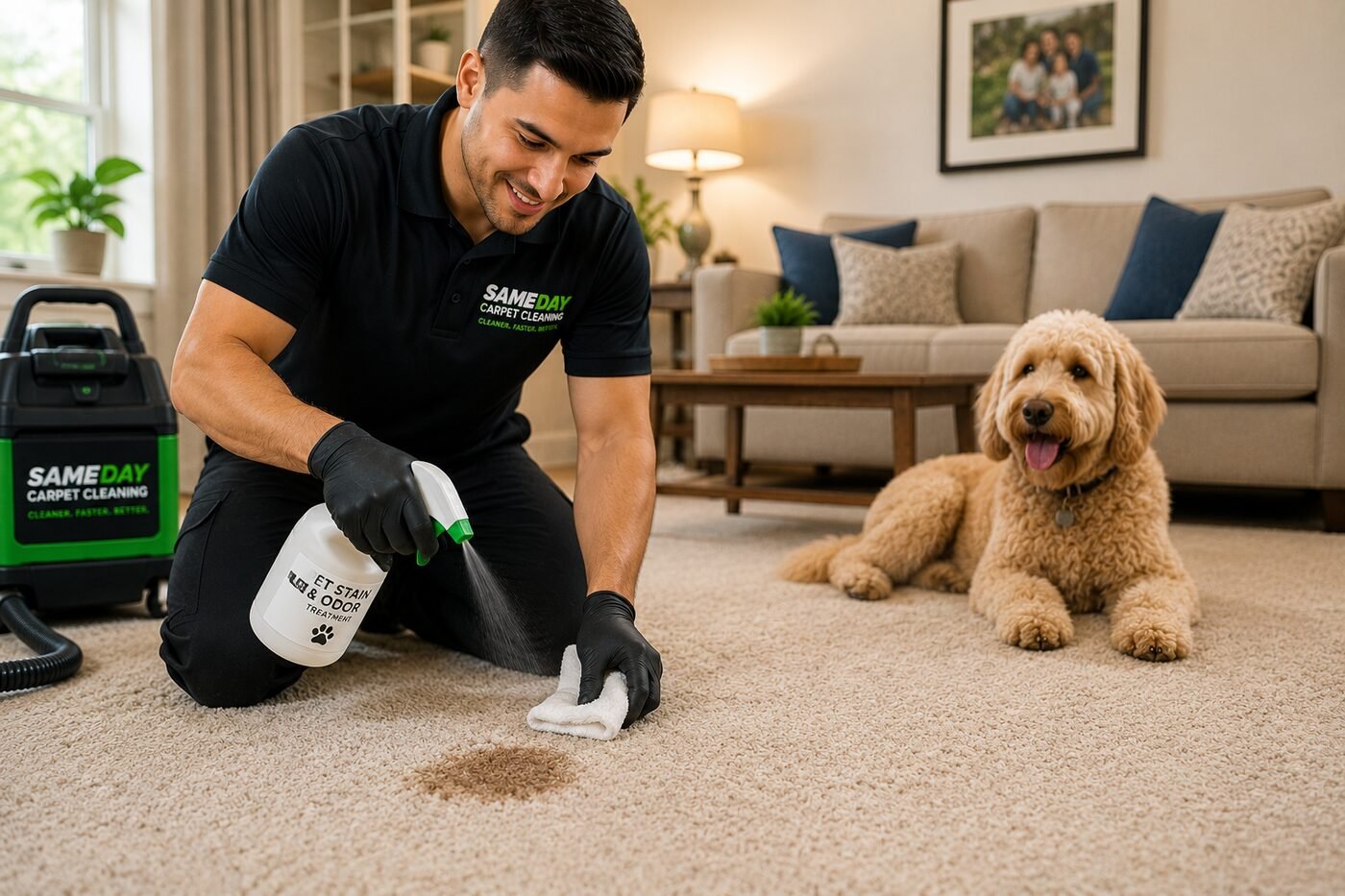
Both cat and dog urine respond to the same basic enzyme-based treatment approach, but they're not identical problems, and cat urine specifically tends to be more concentrated and more persistent, which affects how thoroughly it needs to be treated.
Why Cat Urine Tends to Smell Stronger
Cat urine contains a compound that breaks down into particularly pungent-smelling byproducts as it ages, which is part of why cat urine odor tends to be more noticeable and more persistent than dog urine, even in similar quantities. This isn't a reflection of poor litter box habits, it's simply a difference in urine composition between the species.
Concentration Matters More With Cats
Cats often produce more concentrated urine than dogs, which means a cat accident can soak deeper into carpet, padding, and subfloor relative to its visible size than a comparable dog accident might. This is part of why cat urine issues sometimes require more aggressive pad or subfloor treatment than dog-related stains of similar apparent size.
Both Need the Same Enzyme-Based Approach
Regardless of species, the underlying solution is the same: enzyme-based treatment that breaks down the bacteria producing the odor, rather than surface products that only mask it temporarily. The core method doesn't change based on which pet caused the stain.
We use UV detection and enzyme treatment regardless of which pet is responsible for the stain.
See Our Odor Removal Process →Why UV Detection Matters Especially for Cats
Because cat urine can be more concentrated and prone to soaking deeper, UV black light detection is particularly useful for identifying the full extent of cat-related contamination, which is often more extensive than what's visible on the surface. This is especially relevant in multi-cat households, where several animals may be using overlapping areas.
The Bottom Line
Species doesn't change the treatment method, but it can change the severity and depth of what needs to be addressed. A thorough inspection, rather than assumptions based on species, is what actually determines the right scope of treatment.