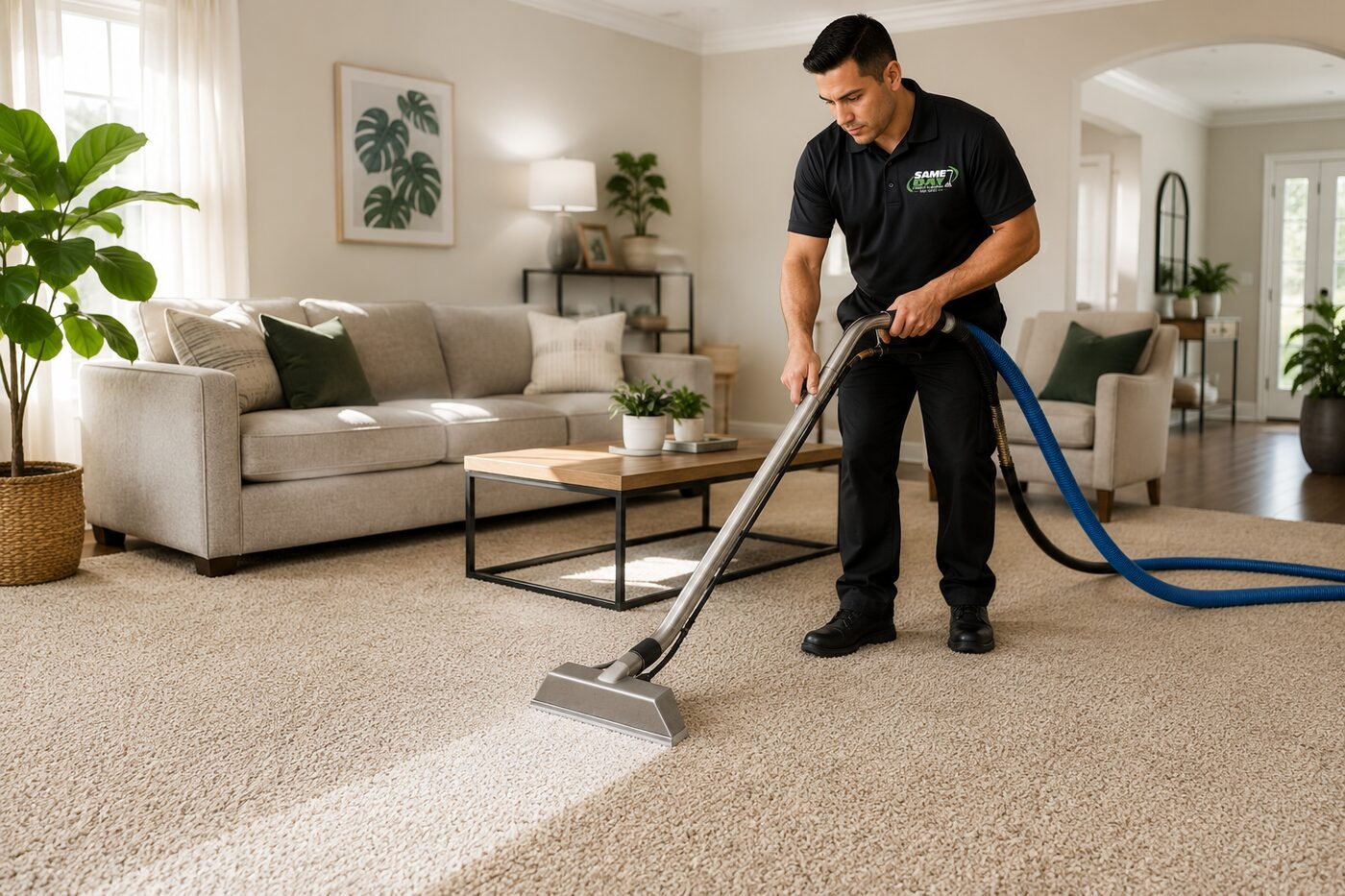
Living near the Long Island Sound comes with real advantages, but it also means dealing with a set of home maintenance issues that inland homeowners simply don't face in the same way. Salt-laden air and consistently higher humidity affect nearly everything soft and porous in a home, from carpets to rugs to furniture, often in ways that aren't obvious until a problem has already developed.
Why Humidity Runs Higher Near the Water
Homes closer to the Sound deal with more ambient moisture in the air than homes even a few miles further inland, and that moisture doesn't stay outside. It gets into carpets, rugs, upholstery, and mattresses through the same airflow that circulates through every room, and it gets trapped in fibers and padding when materials don't have a chance to fully dry out between humid stretches of weather.
What This Means for Carpet
Moisture trapped in carpet fibers and the pad underneath becomes a breeding ground for mildew if it isn't fully removed during cleaning. This is exactly why the cleaning method matters so much in this area specifically: full hot water extraction, done correctly, removes both the dirt and the moisture, while rental machines or lower-powered methods often leave residual moisture behind, right alongside the cleaning solution itself, creating ideal conditions for a musty smell that never fully airs out.
What This Means for Rugs
Rugs sitting on hardwood or tile face a specific risk: moisture can get trapped underneath, between the rug and the floor, where there's minimal airflow to help it evaporate. This can lead to mold developing on the rug's backing or on the floor itself, even when the visible top of the rug looks completely fine. Wool rugs are particularly susceptible since the fiber absorbs moisture more readily than synthetic materials.
What This Means for Furniture
Upholstered furniture, especially pieces in sunrooms or near frequently opened windows, deals with more humidity exposure than furniture in interior rooms. Leather furniture faces a related but different risk: humidity can allow mold to develop in seams and folds if the leather isn't conditioned regularly, since dried-out leather actually cracks and separates in ways that trap moisture more easily than well-conditioned leather does.
We factor local humidity into every cleaning method we use, not just the visible dirt.
See Our Carpet Cleaning Process →The Storm Risk Factor
Beyond everyday humidity, coastal homes face a meaningfully higher risk of storm surge and flooding than homes further inland. When water damage does happen here, it more often involves outdoor-sourced water that may carry contaminants, which changes how the cleanup and drying process needs to be approached compared to a straightforward indoor pipe leak further from the water.
What Homeowners Can Actually Do
A few practical habits help offset these risks:
- Run a dehumidifier in rooms that stay noticeably humid, particularly sunrooms and rooms with south or water-facing windows
- Clean carpets, rugs, and furniture on a schedule slightly more frequent than general guidelines suggest, since local conditions accelerate the buildup these guidelines are based on
- Make sure rugs on hardwood or tile get occasional airflow underneath, rather than sitting completely undisturbed for years
- Address any water intrusion immediately rather than waiting to see if it dries on its own, since mold can begin developing within 24 to 48 hours
Why This Matters More Here Than Elsewhere
None of this is to say homes near the water are worse off, just that the maintenance calculus is genuinely different than it is 20 minutes inland. Cleaning schedules, methods, and even the products used need to account for a level of ambient moisture that simply isn't a factor in drier inland conditions. Understanding that difference is most of what it takes to stay ahead of the mildew, odor, and moisture problems that catch a lot of coastal homeowners off guard.